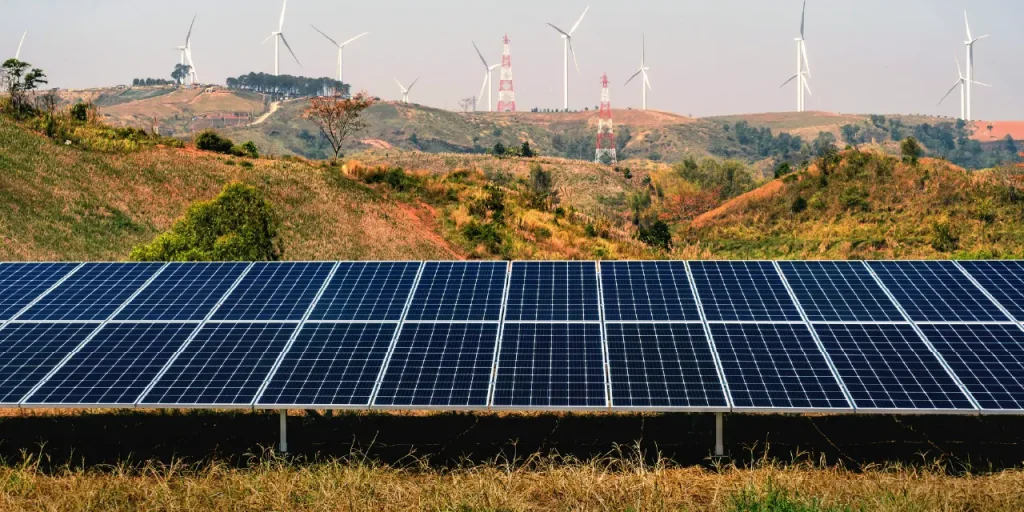
India’s renewable energy sector is undergoing rapid expansion. As of August 2026, the country had approximately 295.6 GW of installed renewable energy capacity, including large hydropower, with solar accounting for 168.0 GW—more than half of the total renewable capacity. India continues to pursue its national target of achieving 500 GW of non-fossil fuel-based installed electricity capacity by 2030. At the same time, rooftop solar deployment is expanding through initiatives such as the PM Surya Ghar: Muft Bijli Yojana, while large-scale solar projects and solar parks continue to support the country’s broader clean-energy transition.
Kerala, with its distinctive geography, concentrated population centres, and evolving energy requirements, is pursuing its own approach within India’s broader clean-energy transition. Against this backdrop, INKEL Limited is expanding its involvement in renewable energy and sustainable infrastructure initiatives in the state.
As a Public-Private Partnership initiative promoted by the Government of Kerala, INKEL was established with a focus on mobilising public and private capital and professional expertise for infrastructure development. Over the years, its portfolio has expanded to include renewable energy, adding a new dimension to its infrastructure mandate as the state responds to evolving energy and sustainability priorities.
Through its Renewable Energy Division, the organisation has developed and implemented solar power projects for government departments, utilities, local bodies and other institutional clients. INKEL’s renewable-energy activities span rooftop and ground-mounted solar projects, EPC and turnkey solutions, project management consultancy, and operations and maintenance. From its early projects in the renewable-energy sector, INKEL has expanded its portfolio to include a wider range of solar and emerging renewable-energy initiatives.
Kerala presents a distinctive combination of opportunities and constraints for renewable-energy development. The availability of large, contiguous tracts of land for utility-scale solar can be limited, while the state’s dispersed settlement pattern and varied terrain add to the complexity of project development. These constraints have increased the relevance of distributed, rooftop and floating solar solutions, which can enable renewable-energy deployment while making more efficient use of available land and existing infrastructure.
Rooftop and floating solar solutions offer an effective way to make productive use of existing built infrastructure and water bodies, expanding renewable generation without requiring extensive new land.
Hybrid and distributed generation models can help reduce transmission losses, strengthen grid resilience, and bring power generation closer to centres of demand.
Public-sector partnerships further expand this opportunity by enabling government buildings, institutions, and utility infrastructure to serve as generation sites rather than remaining purely as consumers of electricity.
INKEL’s work sits squarely within this evolving context. Through partnerships with State DISCOMs, INKEL is helping develop solar capacity on existing public infrastructure, adding clean generation capacity where it is needed while making more efficient use of available assets.
Large infrastructure projects succeed or fail on execution, not intent. From site assessment and engineering design to procurement, construction, and commissioning, delivering a utility-scale solar project requires the coordination of multiple disciplines, including civil works, electrical engineering, grid integration, environmental compliance, and long-term operations and maintenance.
INKEL’s approach has been to build this expertise in-house while working with strong execution partners, ensuring that projects are not only technically sound on paper but also capable of delivering reliable generation throughout their operational life. This includes careful attention to factors that shape long-term performance: panel degradation rates, inverter efficiency, maintenance access, grid stability, and system reliability. These may be less visible than the headline capacity of a project, but they are essential to determining whether a solar asset continues to generate value for decades or underperforms within a few years.
There is a tendency in infrastructure development to treat sustainability as an add-on—a certification to obtain or a line item in a report. INKEL’s approach has been to view sustainability as a design principle from the outset. This means evaluating projects not only by their installed capacity, but also by their contribution to grid stability, local economic activity, resource efficiency, and long-term public value.
For institutions and communities, this approach can translate into tangible outcomes: lower and more predictable energy costs, reduced dependence on fossil-fuel-based generation, and infrastructure that contributes to Kerala’s broader climate and development objectives. By integrating sustainability into project planning and execution, renewable energy infrastructure can deliver value that extends beyond energy generation, supporting more resilient institutions, communities, and public assets over the long term.
India’s renewable energy trajectory over the coming years is expected to bring continued growth in utility-scale solar, greater adoption of rooftop systems, and increasing integration of energy storage to manage grid variability. For a state like Kerala, this presents opportunities to develop distributed, resilient, and locally relevant renewable energy infrastructure, rather than simply replicating large, land-intensive solar parks designed for different geographies.
INKEL intends to remain an active participant in this transition, combining its technical expertise with its public-private mandate to develop and deliver renewable energy infrastructure that responds to Kerala’s evolving energy needs. By focusing on practical, scalable, and long-term solutions, INKEL can contribute to a renewable energy ecosystem that creates lasting value for the state’s institutions, communities, and public assets.
INKEL Limited is a public-private partnership (PPP) initiative of the Government of Kerala, focused on developing infrastructure that creates lasting value for the state. Through its growing focus on renewable energy, INKEL is helping build practical, sustainable infrastructure that supports Kerala’s evolving energy needs and contributes to a more resilient and sustainable future.

+91 484-2978101 (09:30 AM – 5:30 PM)
Designed by