The renewable energy conversation is undergoing a profound transformation. What once passed as corporate sustainability—installing a few rooftop solar panels or purchasing unbundled carbon credits—has become outdated.
Today, severe land constraints, rising commercial tariffs, and ambitious net-zero mandates are driving a new paradigm: Decentralized Energy Architecture and Group Captive Power Models.
At INKEL, we believe this evolution demands more than conventional Engineering, Procurement, and Construction (EPC) practices. It requires a fundamental rethinking of how industries source, co-own, and consume clean power.
In regions like Kerala, the biggest challenge to renewable energy deployment isn’t technology—it’s space. High land costs and limited acreage make large, utility-scale solar farms impractical. The solution lies in Group Captive Power Generation.
Under this framework, a consortium of commercial and industrial consumers co-own a renewable energy facility. By holding at least 26% equity and consuming a minimum of 51% of the generated power, businesses unlock significant advantages:
Protection from Tariff Volatility: Co-ownership ensures predictable, lower per-unit costs for decades.
Localized Grid Resilience: Dedicated capacity reduces strain on the central grid.
Direct Green Mandate Fulfillment: Companies can point to physical megawatt-scale assets powering their operations.
INKEL has pioneered this model in Kerala with a landmark 20.5 MWp Group Captive Solar PV Project at INKEL Greens Industrial Park, Malappuram.
By repurposing 69 acres of otherwise unusable terrain within our 256-acre park, we transformed idle land into a high-yield clean energy asset.
Global and regional leaders—including Hi-Lite Mall and Secura Mall — have joined as co-owners and consumers. This marks the first fully operational Group Captive model of its scale in Kerala, setting a repeatable blueprint for industrial clusters nationwide.
The next frontier is overcoming intermittency—the reality that the sun sets and the wind shifts. True energy independence requires a multi-source ecosystem supported by advanced storage.
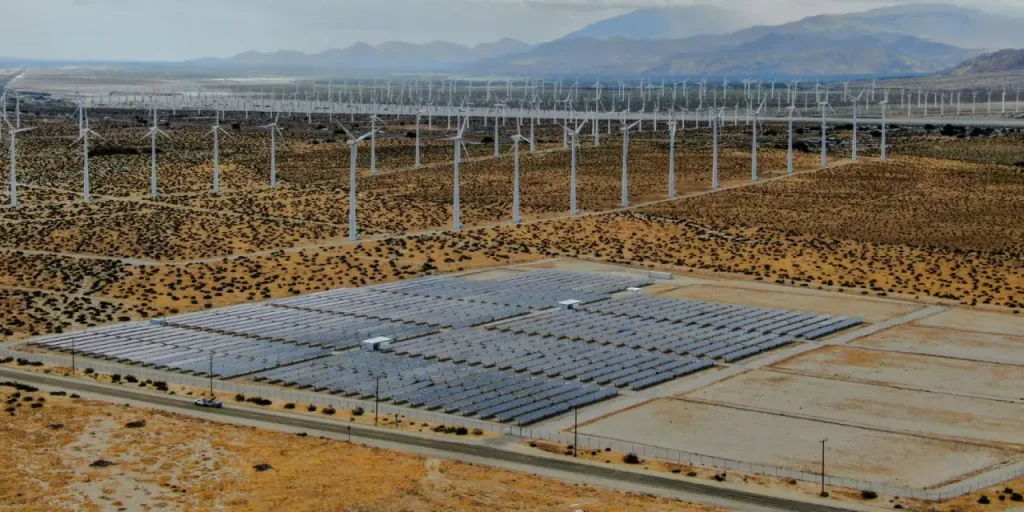
To address this, INKEL is developing a ₹250 crore Hybrid Renewable Energy Park in Palakkad, combining:
This hybrid approach balances day-peak solar with night-peak wind, delivering a steady, predictable baseline to the Kerala State Electricity Board (KSEBL).
Looking ahead, we are integrating Battery Energy Storage Systems (BESS) to store surplus daytime energy for evening peaks—enabling true 24/7 sustainable operations.
Renewable energy is no longer just an environmental imperative—it is a core business strategy.
With the highest SP1B rating for Solar System Integrators and recognition as Asia-Pacific’s Best EPC Contractor, INKEL is proud to engineer frameworks that empower businesses to co-own their green future.
The grid of tomorrow will be decentralized, democratized, and co-owned. The transition is already underway—and we are built to lead it.
Learn more about INKEL’s energy initiatives at inkel.in

+91 484-2978101 (09:30 AM – 5:30 PM)
Designed by